
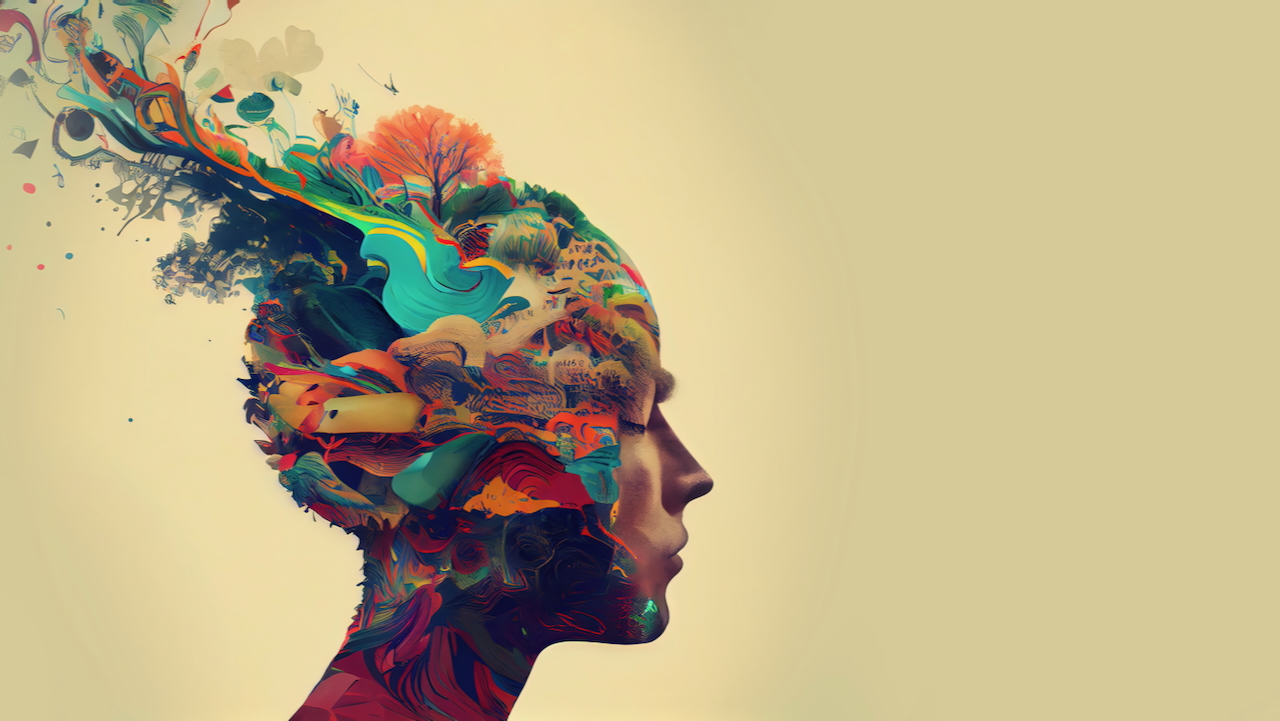
This blog is a public space for sharing what emerges from my ongoing research and writing project on regenerating imagination and imagining regeneration. In this first post, I’ll give a bit of the background on how this project emerged and what I’m planning to focus on.
How did this project emerge?
I’ve been fascinated by the role of culture in shaping our collective response to challenges like climate change since my doctoral research twenty years ago. In my 2005 PhD thesis, I explored the ways that different cultural discourses compete to shape our collective response to climate change and called for creative practices as a way to engage citizens with climate change response.
I never lost this interest but my focus was elsewhere for a decade as I established an academic career and embarked on the great adventure of parenthood. Then in 2017, my passion for this topic was reawakened when I was invited to participate in the SDG Transformations Forum. The Forum was the brainchild of sustainability transformations practitioner Steve Waddell. Its mission was to support collaborative knowledge creation and collective action towards a transformative approach to the Sustainable Development Goals. Participants met for the first time alongside the Transformations Conference 2017 in Scotland and identified six deep sustainability challenges to work on, one of which was transforming meta-narratives – the deep stories that shape our cultural groups.
I wound up co-leading the Forum’s working group on transforming meta-narratives with Karen O’Brien and Sandra Waddock. We defined our purpose as follows:
This Working Group explores and supports emergence of new meta-narratives and their component memes and stories that promote and respect equitable and sustainable development, with a particular focus on developing the knowledge linked to practice.
While the Forum didn’t last, my participation reignited my interest in the role of culture in shaping our response to sustainability challenges. Since then, I’ve written various scholarly articles exploring the role that narrative, discourse and imaginaries play in constraining and enabling action on the pressing social-ecological challenges of our time. You can find some of them under Further Reading on this site. Until now, those pieces have been a bit ad hoc, lacking a systematic approach.
What is this project about?
I’ve now reached the point where I want to bring the disparate threads of this work together and invite others into my sensemaking. I’m thinking of it as an ongoing research and writing project, with the tagline ‘regenerating imagination, imagining regeneration’. Apart from having a beautiful symmetry to it, this tagline expresses a theory of change. My argument is that we are suffering from a deficit of imagination when it comes to our responses to global challenges. This famous quote expresses it well.
“It’s easier to imagine the end of the world than the end of capitalism”.
Fredric Jameson and Slavoj Žižek
We are so immersed in the socio-economic systems we have built over hundreds of years that we find it incredibly difficult to imagine pathways towards alternative systems. This matters because those systems, including capitalism, are doing untold damage – to humans and non-humans alike. Changing those systems is possible and necessary but requires deep cultural change.
In my work to date, I’ve found that most people, when given time and opportunity, are able to imagine a different and better world to the one we have. While their visions for a preferred future are wildly diverse, there are common threads. The collective story is one that respects the Earth and fosters life, community, regeneration, and resilience. It emphasises wellbeing and justice for all, recognising our profound interdependence with each other and the living world. I think of this as a ‘planetcentric’ narrative—one that values the whole of planet Earth and seeks ways for all peoples and all living things to thrive together.
What people find much more challenging, as the quote above indicates, is how to get from here to there? Imagining realistic pathways beyond our current socio-economic systems seems a bridge too far for many people, and that’s what I particularly want to explore. My thesis is that we need to rebuild our collective capacity to imagine better futures and the pathways towards them. Only then will we be able to imagine and enact regenerative futures.
If you’re not familiar with terms like regenerative futures or imaginaries, don’t worry – I’ll spend time in future posts examining and defining these terms. Some of the questions I intend to explore include:
- How do our collective imaginations shape our capacity to build a regenerative future?
- What social imaginaries dominate our institutions and what alternatives are emerging in literature, popular culture and social movements?
- How can we build our collective imaginative capacity to make emergence of regenerative futures more likely?
Expect to read about ideas from speculative fiction genres such as climate fiction, eco-fiction, protopian and thrutopian writing, solarpunk and hopepunk as well as the barely visible stories embedded in our institutions.
Ultimately, Planetcentric is intended as a space to research, explore, and actively cultivate the stories that can sustain us in a time when hope for the future can be hard to find. It will document my ongoing search for the imaginaries that can support the emergence of a truly regenerative, planetcentric world.
I would love to hear from you. What inspires you when you think about the future? What do you imagine when you dream about a better world?
Leave a Reply